


About OPDIVO Qvantig
OPDIVO Qvantig®: The OPDIVO® you know*—delivered faster† to your eligible patients1,2
OPDIVO Qvantig delivered noninferior PK and efficacy when compared to OPDIVO IV (nivolumab).2,3
*Based on the FDA approvals stemming from numerous OPDIVO IV (nivolumab) pivotal trials.1
†A 3- to 5-minute injection of OPDIVO Qvantig compared with a 30-minute infusion of IV OPDIVO. This does not account for all aspects of treatment and does not include observation time. Actual clinic time may vary.1,2
IV=intravenous.
Checkmate 67T Study Information: Study design: Checkmate 67T was a phase 3, randomized (1:1), open-label, noninferiority trial evaluating OPDIVO Qvantig (1,200 mg of nivolumab and 20,000 units of hyaluronidase) compared with OPDIVO IV, in adult patients with advanced or metastatic ccRCC who received prior systemic therapy. Patients were stratified by weight (<80 kg vs ≥80 kg) and IMDC risk score (favorable vs intermediate vs poor risk). A total of 495 patients were randomized to receive either OPDIVO Qvantig every 4 weeks subcutaneously (n=248) or OPDIVO 3 mg/kg every 2 weeks intravenously (n=247). The co-primary endpoints were time-averaged serum concentration over 28 days (Cavgd28) and minimum serum concentration at steady state (Cminss). The key powered secondary endpoint was ORR, as assessed by BICR. The minimum follow-up time was 8 months.2,3
Results: Co-primary PK endpoints: Cavgd28 GMR of 2.10 (90% CI: 2.00–2.20) and Cminss GMR of 1.77 (90% CI: 1.63–1.93). ORR was 24% (95% CI: 19–30) for OPDIVO Qvantig (n=248) and 18% (95% CI: 14–24) for OPDIVO IV (n=247) with a risk ratio of 1.33 (95% CI: 0.94–1.87). Both PK and ORR met the predefined acceptance margin for noninferiority.2,3
The most common adverse reactions (≥10%) in patients treated with OPDIVO Qvantig were musculoskeletal pain, fatigue, pruritus, rash, hypothyroidism, diarrhea, cough, and abdominal pain. Serious adverse reactions occurred in 28% of patients who received OPDIVO Qvantig. Serious adverse reactions in >1% of patients included pleural effusion, pneumonitis, hyperglycemia, hyperkalemia, hemorrhage, and diarrhea.
ccRCC: clear-cell renal cell carcinoma; CI=confidence interval; IMDC=International Metastatic Renal Cell Carcinoma Database Consortium; ORR=objective response rate; PK=pharmacokinetic.
OPDIVO Qvantig: A faster* administration option for certain OPDIVO IV FDA-approved indications1,2
Your treatment plan doesn’t have to change2:

Monotherapy including maintenance therapy†
Combination with oral cabozantinib
Combination with certain chemotherapy regimens

Delivers treatment in as fast as 3 minutes2‡

Reduces preparation steps§ and time administering vs IV OPDIVO1,2*

Offers practice flexibility that may free up infusion chairs2
*A 3- to 5-minute injection of OPDIVO Qvantig compared with a 30-minute infusion of IV OPDIVO. This does not account for all aspects of treatment and does not include observation time. Actual clinic time may vary.1,2
†Monotherapy maintenance following OPDIVO IV + YERVOY IV combination therapy.2
‡Recommended administration time is 3-5 minutes and does not include other aspects of treatment. Actual clinic time may vary.2
§No IV preparation, dilution, weight-based dose calculations or port access required with OPDIVO Qvantig.2
Learn more about OPDIVO Qvantig dosing across all approved indications
National Comprehensive Cancer Network® (NCCN®) supports substituting nivolumab + hyaluronidase-nvhy (OPDIVO Qvantig) for IV nivolumab (OPDIVO®) across most approved nivolumab (OPDIVO) IV indications.2,4-13*
NCCN Clinical Practice Guidelines in Oncology (NCCN Guidelines®) that include nivolumab + hyaluronidase-nvhy4-13
- Bladder cancer
- Kidney cancer
- Non-small cell lung cancer
- Rectal cancer
- Head and neck cancers
- Melanoma: cutaneous
- Esophageal and esophagogastric junction cancers
- Gastric cancer
- Colon cancer
- Hepatocellular carcinoma
*OPDIVO Qvantig is not indicated in combination with ipilimumab.2 NCCN makes no warranties of any kind whatsoever regarding their content, use or application and disclaims any responsibility for their application or use in any way.
OPDIVO Qvantig is approved for the following tumor types.
Please see tray below for full indications.
Advanced Renal Cell Carcinoma (RCC)
-
1L Intermediate- or Poor-Risk aRCC
As monotherapy following treatment with OPDIVO + YERVOY combination therapy
LIMITATIONS OF USE: OPDIVO Qvantig is not indicated in combination with ipilimumab for the treatment of renal cell carcinoma. -
1L Advanced RCC
In combination with cabozantinib
-
2L Advanced RCC
As monotherapy
Non-Small Cell Lung Cancer
-
Neoadjuvant Treatment of Resectable Non-Small Cell Lung Cancer
In combination with platinum-doublet chemotherapy
-
Perioperative Treatment of Resectable Non-Small Cell Lung Cancer
In combination with platinum-doublet chemotherapy followed by monotherapy administration
-
Metastatic Non-Small Cell Lung Cancer
As monotherapy
LIMITATIONS OF USE: OPDIVO Qvantig is not indicated in combination with ipilimumab for the treatment of metastatic NSCLC.
Gastroesophageal Cancers
-
Adjuvant Treatment of Completely Resected Esophageal or Gastroesophageal Junction Cancer
As monotherapy
-
1L Metastatic Gastric, Gastroesophageal Junction, or Esophageal Adenocarcinoma
In combination with fluoropyrimidine- and platinum-containing chemotherapy
-
1L Metastatic Esophageal Squamous Cell Carcinoma
In combination with fluoropyrimidine- and platinum-containing chemotherapy
LIMITATIONS OF USE: OPDIVO Qvantig is not indicated in combination with ipilimumab for the treatment of patients with unresectable advanced or metastatic ESCC.
-
2L Unresectable Advanced, Recurrent, or Metastatic Esophageal Squamous Cell Carcinoma
As monotherapy
Melanoma
-
Adjuvant Treatment of Stage IIB/C Melanoma
As monotherapy
-
Adjuvant Treatment of Stage III or IV Melanoma
As monotherapy
-
Unresectable or Metastatic Melanoma
As monotherapy or monotherapy following treatment with intravenous nivolumab and ipilimumab combination therapy
LIMITATIONS OF USE: OPDIVO Qvantig is not indicated in combination with ipilimumab for the treatment of unresectable or metastatic melanoma.
Urothelial Carcinoma
-
Adjuvant Treatment of Urothelial Carcinoma
As monotherapy
-
1L Unresectable or Metastatic Urothelial Carcinoma
In combination with cisplatin and gemcitabine followed by monotherapy administration
-
2L Locally Advanced or Metastatic Urothelial Carcinoma
As monotherapy
Hepatocellular Carcinoma (HCC)
-
1L Unresectable or Metastatic Hepatocellular Carcinoma (HCC)
As monotherapy, following treatment with intravenous nivolumab and ipilimumab combination therapy.
LIMITATIONS OF USE: OPDIVO Qvantig is not indicated in combination with ipilimumab for the treatment of patients with unresectable or metastatic HCC. -
2L Unresectable or Metastatic Hepatocellular Carcinoma (HCC)
As monotherapy, in adult patients previously treated with sorafenib, and following treatment with nivolumab and ipilimumab combination therapy.
LIMITATIONS OF USE: OPDIVO Qvantig is not indicated in combination with ipilimumab for the treatment of patients with unresectable or metastatic HCC.
MSI-H/dMMR Colorectal Cancer (CRC)
-
Unresectable or metastatic MSI-H/dMMR CRC
As monotherapy, following treatment with intravenous nivolumab and ipilimumab combination therapy.
LIMITATIONS OF USE: OPDIVO Qvantig is not indicated in combination with ipilimumab for the treatment of unresectable or metastatic MSI-H or dMMR metastatic CRC. -
Metastatic MSI-H/dMMR Colorectal Cancer (CRC) that has progressed following prior treatment for metastatic disease
As monotherapy, following progression after treatment with a fluoropyrimidine, oxaliplatin, and irinotecan
Other Tumor Types
-
Squamous Cell Carcinoma of the Head and Neck
As monotherapy
OPDIVO Qvantig Preparation and Administration Videos
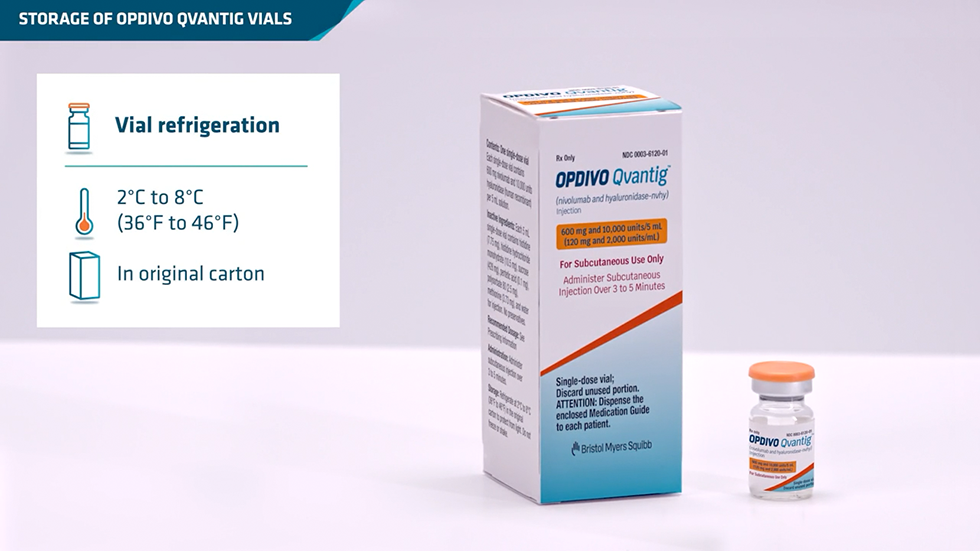
Chapter 1: Storage and handling
See storage and handling considerations for this faster* administration option across multiple cancer types1,2
Chapter 2: Preparation
See preparation considerations for this faster* administration option across multiple cancer types1,2
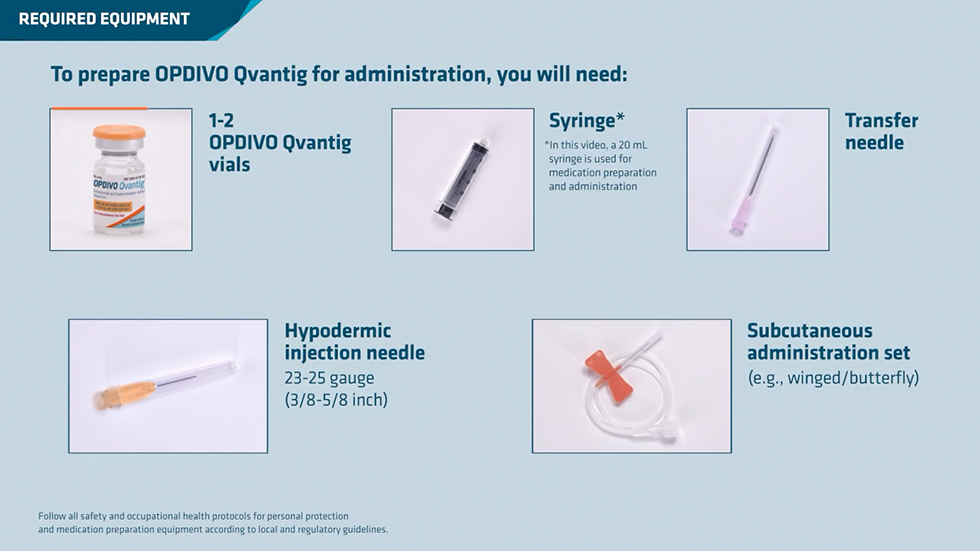
Chapter 3: Administration
See administration techniques for this faster* administration option across multiple cancer types1,2
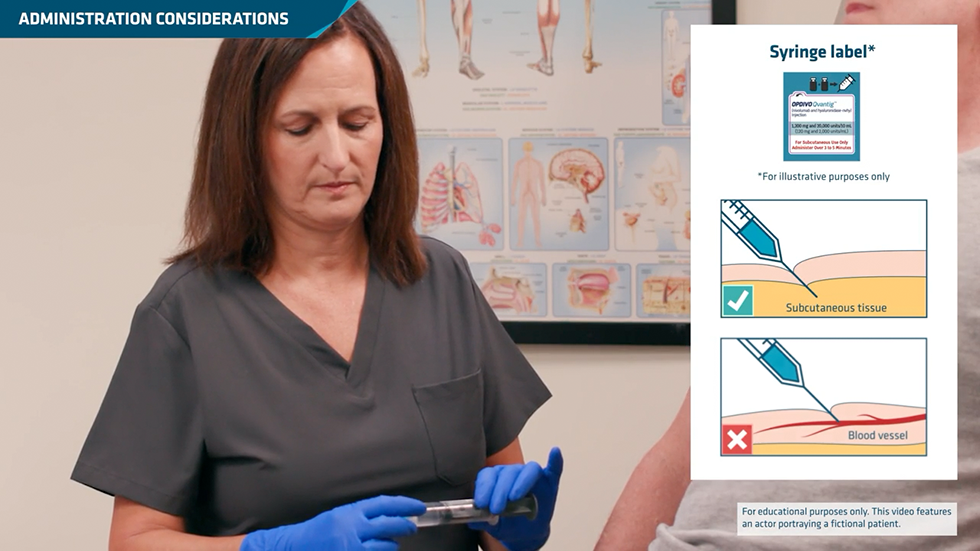
*A 3-5 minute injection of OPDIVO Qvantig compared to a 30-minute infusion time of OPDIVO IV. Refers to injection time and does not include other aspects of treatment; actual clinic time may vary. Must be administered by a healthcare professional.1

OPDIVO Qvantig FAQs
Answers to common questions about
OPDIVO Qvantig

OPDIVO Qvantig Resources
Resources for OPDIVO Qvantig for your practice and your patients

Patient Access and Support
Access information and clinical resources for your patients
References:
- OPDIVO [package insert]. Princeton, NJ: Bristol-Myers Squibb Company.
- OPDIVO Qvantig [package insert]. Princeton, NJ: Bristol-Myers Squibb Company.
- Albiges L, Bourlon MT, Chacón M, et al. Subcutaneous versus intravenous nivolumab for renal cell carcinoma. Ann Oncol. 2025;36(1):99-107. doi:10.1016/j.annonc.2024.09.002
- Referenced with permission from the NCCN Clinical Practice Guidelines in Oncology (NCCN Guidelines®) for Bladder Cancer V.3.2026. © National Comprehensive Cancer Network, Inc. 2026. All rights reserved. Accessed August 10, 2026. To view the most recent and complete version of the guideline, go online to NCCN.org. NCCN makes no warranties of any kind whatsoever regarding their content, use or application and disclaims any responsibility for their application or use in any way.
- Referenced with permission from the NCCN Clinical Practice Guidelines in Oncology (NCCN Guidelines®) for Kidney Cancer V.1.2027. © National Comprehensive Cancer Network, Inc. 2026. All rights reserved. Accessed August 6, 2026. To view the most recent and complete version of the guideline, go online to NCCN.org.
- Referenced with permission from the NCCN Clinical Practice Guidelines in Oncology (NCCN Guidelines®) for Non-Small Cell Lung Cancer V.7.2026. © National Comprehensive Cancer Network, Inc. 2026. All rights reserved. Accessed August 10, 2026. To view the most recent and complete version of the guideline, go online to NCCN.org.
- Referenced with permission from the NCCN Clinical Practice Guidelines in Oncology (NCCN Guidelines®) for Head and Neck Cancers V.2.2026. © National Comprehensive Cancer Network, Inc. 2026. All rights reserved. Accessed August 6, 2026. To view the most recent and complete version of the guideline, go online to NCCN.org.
- Referenced with permission from the NCCN Clinical Practice Guidelines in Oncology (NCCN Guidelines®) for Melanoma: Cutaneous V.2.2026. © National Comprehensive Cancer Network, Inc. 2026. All rights reserved. Accessed August 6, 2026. To view the most recent and complete version of the guideline, go online to NCCN.org.
- Referenced with permission from the NCCN Clinical Practice Guidelines in Oncology (NCCN Guidelines®) for Esophageal and Esophagogastric Junction Cancer V.3.2026. © National Comprehensive Cancer Network, Inc. 2026. All rights reserved. Accessed August 6, 2026. To view the most recent and complete version of the guideline, go online to NCCN.org.
- Referenced with permission from the NCCN Clinical Practice Guidelines in Oncology (NCCN Guidelines®) for Gastric Cancer V.3.2026. © National Comprehensive Cancer Network, Inc. 2026. All rights reserved. Accessed August 6, 2026. To view the most recent and complete version of the guideline, go online to NCCN.org.
- Referenced with permission from the NCCN Clinical Practice Guidelines in Oncology (NCCN Guidelines®) for Colon Cancer V.2.2026. © National Comprehensive Cancer Network, Inc. 2026. All rights reserved. Accessed August 6, 2026. To view the most recent and complete version of the guideline, go online to NCCN.org.
- Referenced with permission from the NCCN Clinical Practice Guidelines in Oncology (NCCN Guidelines®) for Hepatocellular Carcinoma V.2.2026. © National Comprehensive Cancer Network, Inc. 2026. All rights reserved. Accessed August 24, 2026. To view the most recent and complete version of the guideline, go online to NCCN.org.
- Referenced with permission from the NCCN Clinical Practice Guidelines in Oncology (NCCN Guidelines®) for Rectal Cancer. V.2.2026. © National Comprehensive Cancer Network, Inc. 2026. All rights reserved. Accessed August 6, 2026. To view the most recent and complete version of the guideline, go to NCCN.org.
Important Safety Information
Severe and Fatal Immune-Mediated Adverse Reactions
Immune-mediated adverse reactions listed herein may not include all possible severe and fatal immune-mediated adverse reactions.
Immune-mediated adverse reactions, which may be severe or fatal, can occur in any organ system or tissue. While immune-mediated adverse reactions usually manifest during treatment, they can also occur after discontinuation of OPDIVO QVANTIG, OPDIVO, or YERVOY. Early identification and management are essential to ensure safe use of OPDIVO QVANTIG, OPDIVO, and YERVOY. Monitor for signs and symptoms that may be clinical manifestations of underlying immune-mediated adverse reactions. Evaluate clinical chemistries including liver enzymes, creatinine, adrenocorticotropic hormone (ACTH) level, and thyroid function at baseline and periodically during treatment with OPDIVO QVANTIG, OPDIVO and before each dose of YERVOY. In cases of suspected immune-mediated adverse reactions, initiate appropriate workup to exclude alternative etiologies, including infection. Institute medical management promptly, including specialty consultation as appropriate.
Withhold or permanently discontinue OPDIVO QVANTIG, OPDIVO, and YERVOY depending on severity (please see section 2 Dosage and Administration in the accompanying Full Prescribing Information). In general, if OPDIVO QVANTIG, OPDIVO or YERVOY interruption or discontinuation is required, administer systemic corticosteroid therapy (1 to 2 mg/kg/day prednisone or equivalent) until improvement to Grade 1 or less. Upon improvement to Grade 1 or less, initiate corticosteroid taper and continue to taper over at least 1 month. Consider administration of other systemic immunosuppressants in patients whose immune-mediated adverse reactions are not controlled with corticosteroid therapy. Toxicity management guidelines for adverse reactions that do not necessarily require systemic steroids (e.g., endocrinopathies and dermatologic reactions) are discussed below.
Immune-Mediated Pneumonitis
OPDIVO QVANTIG, OPDIVO, and YERVOY can cause immune-mediated pneumonitis. The incidence of pneumonitis is higher in patients who have received prior thoracic radiation. Immune-mediated pneumonitis occurred in 2.8% (7/247) of patients receiving OPDIVO QVANTIG, including Grade 3 (0.8%) and Grade 2 (2.0%) adverse reactions. In patients receiving OPDIVO monotherapy, immune-mediated pneumonitis occurred in 3.1% (61/1994) of patients, including Grade 4 (<0.1%), Grade 3 (0.9%), and Grade 2 (2.1%). In patients receiving OPDIVO 1 mg/kg with YERVOY 3 mg/kg every 3 weeks, immune-mediated pneumonitis occurred in 7% (31/456) of patients, including Grade 4 (0.2%), Grade 3 (2.0%), and Grade 2 (4.4%). In patients receiving OPDIVO 3 mg/kg with YERVOY 1 mg/kg every 3 weeks, immune-mediated pneumonitis occurred in 3.9% (26/666) of patients, including Grade 3 (1.4%) and Grade 2 (2.6%). In NSCLC patients receiving OPDIVO 3 mg/kg every 2 weeks with YERVOY 1 mg/kg every 6 weeks, immune-mediated pneumonitis occurred in 9% (50/576) of patients, including Grade 4 (0.5%), Grade 3 (3.5%), and Grade 2 (4.0%). Four patients (0.7%) died due to pneumonitis.
Immune-Mediated Colitis
OPDIVO QVANTIG, OPDIVO, and YERVOY can cause immune-mediated colitis, which may be fatal. A common symptom included in the definition of colitis was diarrhea. Cytomegalovirus (CMV) infection/reactivation has been reported in patients with corticosteroid-refractory immune-mediated colitis. In cases of corticosteroid-refractory colitis, consider repeating infectious workup to exclude alternative etiologies. Immune-mediated colitis occurred in 2.8% (7/247) of patients receiving OPDIVO QVANTIG, including Grade 3 (0.4%) and Grade 2 (2.4%) adverse reactions. In patients receiving OPDIVO monotherapy, immune-mediated colitis occurred in 2.9% (58/1994) of patients, including Grade 3 (1.7%) and Grade 2 (1%). In patients receiving OPDIVO 1 mg/kg with YERVOY 3 mg/kg every 3 weeks, immune-mediated colitis occurred in 25% (115/456) of patients, including Grade 4 (0.4%), Grade 3 (14%) and Grade 2 (8%). In patients receiving OPDIVO 3 mg/kg with YERVOY 1 mg/kg every 3 weeks, immune-mediated colitis occurred in 9% (60/666) of patients, including Grade 3 (4.4%) and Grade 2 (3.7%).
Immune-Mediated Hepatitis and Hepatotoxicity
OPDIVO QVANTIG, OPDIVO, and YERVOY can cause immune-mediated hepatitis. Immune-mediated hepatitis occurred in 2.4% (6/247) of patients receiving OPDIVO QVANTIG, including Grade 3 (1.6%), and Grade 2 (0.8%) adverse reactions. In patients receiving OPDIVO monotherapy, immune-mediated hepatitis occurred in 1.8% (35/1994) of patients, including Grade 4 (0.2%), Grade 3 (1.3%), and Grade 2 (0.4%). In patients receiving OPDIVO 1 mg/kg with YERVOY 3 mg/kg every 3 weeks, immune-mediated hepatitis occurred in 15% (70/456) of patients, including Grade 4 (2.4%), Grade 3 (11%), and Grade 2 (1.8%). In patients receiving OPDIVO 3 mg/kg with YERVOY 1 mg/kg every 3 weeks, immune-mediated hepatitis occurred in 7% (48/666) of patients, including Grade 4 (1.2%), Grade 3 (4.9%), and Grade 2 (0.4%).
OPDIVO in combination with cabozantinib can cause hepatic toxicity with higher frequencies of Grade 3 and 4 ALT and AST elevations compared to OPDIVO alone. Consider more frequent monitoring of liver enzymes as compared to when the drugs are administered as single agents. In patients receiving OPDIVO and cabozantinib, Grades 3 and 4 increased ALT or AST were seen in 11% (35/320) of patients.
Immune-Mediated Endocrinopathies
OPDIVO QVANTIG, OPDIVO, and YERVOY can cause primary or secondary adrenal insufficiency, immune-mediated hypophysitis, immune-mediated thyroid disorders, and Type 1 diabetes mellitus, which can present with diabetic ketoacidosis. Withhold OPDIVO QVANTIG, OPDIVO, and YERVOY depending on severity (please see section 2 Dosage and Administration in the accompanying Full Prescribing Information). For Grade 2 or higher adrenal insufficiency, initiate symptomatic treatment, including hormone replacement as clinically indicated. Hypophysitis can present with acute symptoms associated with mass effect such as headache, photophobia, or visual field defects. Hypophysitis can cause hypopituitarism; initiate hormone replacement as clinically indicated. Thyroiditis can present with or without endocrinopathy. Hypothyroidism can follow hyperthyroidism; initiate hormone replacement or medical management as clinically indicated. Monitor patients for hyperglycemia or other signs and symptoms of diabetes; initiate treatment with insulin as clinically indicated.
Adrenal insufficiency occurred in 2% (5/247) of patients receiving OPDIVO QVANTIG, including Grade 3 (0.8%) and Grade 2 (1.2%) adverse reactions. In patients receiving OPDIVO monotherapy, adrenal insufficiency occurred in 1% (20/1994), including Grade 3 (0.4%) and Grade 2 (0.6%). In patients receiving OPDIVO 1 mg/kg with YERVOY 3 mg/kg every 3 weeks, adrenal insufficiency occurred in 8% (35/456) of patients, including Grade 4 (0.2%), Grade 3 (2.4%), and Grade 2 (4.2%). In patients receiving OPDIVO 3 mg/kg with YERVOY 1 mg/kg every 3 weeks, adrenal insufficiency occurred in 7% (48/666) of patients, including Grade 4 (0.3%), Grade 3 (2.5%), and Grade 2 (4.1%). In patients receiving OPDIVO and cabozantinib, adrenal insufficiency occurred in 4.7% (15/320) of patients, including Grade 3 (2.2%) and Grade 2 (1.9%).
In patients receiving OPDIVO monotherapy, hypophysitis occurred in 0.6% (12/1994) of patients, including Grade 3 (0.2%) and Grade 2 (0.3%). In patients receiving OPDIVO 1 mg/kg with YERVOY 3 mg/kg every 3 weeks, hypophysitis occurred in 9% (42/456) of patients, including Grade 3 (2.4%) and Grade 2 (6%). In patients receiving OPDIVO 3 mg/kg with YERVOY 1 mg/kg every 3 weeks, hypophysitis occurred in 4.4% (29/666) of patients, including Grade 4 (0.3%), Grade 3 (2.4%), and Grade 2 (0.9%).
Thyroiditis occurred in 0.4% (1/247) of patients receiving OPDIVO QVANTIG, including a Grade 1 (0.4%) adverse reaction. In patients receiving OPDIVO monotherapy, thyroiditis occurred in 0.6% (12/1994) of patients, including Grade 2 (0.2%). In patients receiving OPDIVO 3 mg/kg with YERVOY 1 mg/kg every 3 weeks, thyroiditis occurred in 2.7% (22/666) of patients, including Grade 3 (4.5%) and Grade 2 (2.2%).
Hyperthyroidism occurred in 0.8% (2/247) of patients receiving OPDIVO QVANTIG, including Grade 2 (0.4%) adverse reactions. In patients receiving OPDIVO monotherapy, hyperthyroidism occurred in 2.7% (54/1994) of patients, including Grade 3 (<0.1%) and Grade 2 (1.2%). In patients receiving OPDIVO 1 mg/kg with YERVOY 3 mg/kg every 3 weeks, hyperthyroidism occurred in 9% (42/456) of patients, including Grade 3 (0.9%) and Grade 2 (4.2%). In patients receiving OPDIVO 3 mg/kg with YERVOY 1 mg/kg every 3 weeks, hyperthyroidism occurred in 12% (80/666) of patients, including Grade 3 (0.6%) and Grade 2 (4.5%).
Hypothyroidism occurred in 9% (23/247) of patients receiving OPDIVO QVANTIG, including Grade 2 (5.7%) adverse reactions. In patients receiving OPDIVO monotherapy, hypothyroidism occurred in 8% (163/1994) of patients, including Grade 3 (0.2%) and Grade 2 (4.8%). In patients receiving OPDIVO 1 mg/kg with YERVOY 3 mg/kg every 3 weeks, hypothyroidism occurred in 20% (91/456) of patients, including Grade 3 (0.4%) and Grade 2 (11%). In patients receiving OPDIVO 3 mg/kg with YERVOY 1 mg/kg every 3 weeks, hypothyroidism occurred in 18% (122/666) of patients, including Grade 3 (0.6%) and Grade 2 (11%).
Grade 3 diabetes occurred in 0.4% (1/247) of patients receiving OPDIVO QVANTIG. In patients receiving OPDIVO monotherapy, diabetes occurred in 0.9% (17/1994) of patients, including Grade 3 (0.4%) and Grade 2 (0.3%), and 2 cases of diabetic ketoacidosis. In patients receiving OPDIVO 3 mg/kg with YERVOY 1 mg/kg every 3 weeks, diabetes occurred in 2.7% (15/666) of patients, including Grade 4 (0.6%), Grade 3 (0.3%), and Grade 2 (0.9%).
Immune-Mediated Nephritis with Renal Dysfunction
OPDIVO QVANTIG, OPDIVO and YERVOY can cause immune-mediated nephritis. Grade 2 immune-mediated nephritis and renal dysfunction occurred in 1.2% (3/247) of patients receiving OPDIVO QVANTIG. In patients receiving OPDIVO monotherapy, immune-mediated nephritis and renal dysfunction occurred in 1.2% (23/1994) of patients, including Grade 4 (<0.1%), Grade 3 (0.5%), and Grade 2 (0.6%). In patients receiving OPDIVO 3 mg/kg with YERVOY 1 mg/kg every 3 weeks, immune-mediated nephritis with renal dysfunction occurred in 4.1% (27/666) of patients, including Grade 4 (0.6%), Grade 3 (1.1%), and Grade 2 (2.2%).
Immune-Mediated Dermatologic Adverse Reactions
OPDIVO QVANTIG, OPDIVO, and YERVOY can cause immune-mediated rash or dermatitis. Exfoliative dermatitis, including Stevens-Johnson Syndrome, toxic epidermal necrolysis (TEN), and DRESS (drug rash with eosinophilia and systemic symptoms), has occurred with PD-1/PD-L1 blocking antibodies. Topical emollients and/or topical corticosteroids may be adequate to treat mild to moderate non-exfoliative rashes.
Withhold or permanently discontinue OPDIVO QVANTIG, OPDIVO, and YERVOY depending on severity (please see section 2 Dosage and Administration in the accompanying Full Prescribing Information).
Immune-mediated rash occurred in 7% (17/247) of patients taking OPDIVO QVANTIG, including Grade 3 (0.8%) and Grade 2 (2.8%) adverse reactions. In patients receiving OPDIVO monotherapy, immune-mediated rash occurred in 9% (171/1994) of patients, including Grade 3 (1.1%) and Grade 2 (2.2%). In patients receiving OPDIVO 1 mg/kg with YERVOY 3 mg/kg every 3 weeks, immune-mediated rash occurred in 28% (127/456) of patients, including Grade 3 (4.8%) and Grade 2 (10%). In patients receiving OPDIVO 3 mg/kg with YERVOY 1 mg/kg every 3 weeks, immune-mediated rash occurred in 16% (108/666) of patients, including Grade 3 (3.5%) and Grade 2 (4.2%).
Other Immune-Mediated Adverse Reactions
The following clinically significant immune-mediated adverse reactions occurred at an incidence of <1% (unless otherwise noted) in patients who received OPDIVO QVANTIG or OPDIVO monotherapy or in combination with YERVOY, chemotherapy or immunotherapy, or were reported with the use of other PD-1/PD-L1 blocking antibodies. Severe or fatal cases have been reported for some of these adverse reactions: cardiac/vascular: myocarditis, pericarditis, vasculitis; nervous system: meningitis, encephalitis, myelitis and demyelination, myasthenic syndrome/myasthenia gravis (including exacerbation), Guillain-Barré syndrome, nerve paresis, autoimmune neuropathy; ocular: uveitis, iritis, and other ocular inflammatory toxicities can occur; gastrointestinal: pancreatitis to include increases in serum amylase and lipase levels, gastritis, duodenitis; musculoskeletal and connective tissue: myositis/polymyositis, rhabdomyolysis, and associated sequelae including renal failure, arthritis, polymyalgia rheumatica; endocrine: hypoparathyroidism; hematologic/immune: hemolytic anemia, aplastic anemia, hemophagocytic lymphohistiocytosis (HLH), systemic inflammatory response syndrome, histiocytic necrotizing lymphadenitis (Kikuchi lymphadenitis), sarcoidosis, immune thrombocytopenic purpura, solid organ transplant rejection, other transplant (including corneal graft) rejection; other: Myocarditis-Myositis-Myasthenia Gravis (or Myasthenia-Like) Overlap Syndrome, reporting as the co-occurrence of either two or all three adverse reactions.
In addition to the immune-mediated adverse reactions listed above, across clinical trials of YERVOY monotherapy or in combination with OPDIVO, the following clinically significant immune-mediated adverse reactions, some with fatal outcome, occurred in <1% of patients unless otherwise specified: nervous system: autoimmune neuropathy (2%), myasthenic syndrome/myasthenia gravis, motor dysfunction; cardiovascular: angiopathy, temporal arteritis; ocular: blepharitis, episcleritis, orbital myositis, scleritis; gastrointestinal: pancreatitis (1.3%); other (hematologic/immune): conjunctivitis, cytopenias (2.5%), eosinophilia (2.1%), erythema multiforme, hypersensitivity vasculitis, neurosensory hypoacusis, psoriasis.
Some ocular IMAR cases can be associated with retinal detachment. Various grades of visual impairment, including blindness, can occur. If uveitis occurs in combination with other immune-mediated adverse reactions, consider a Vogt-Koyanagi-Harada–like syndrome, which has been observed in patients receiving OPDIVO QVANTIG, OPDIVO, and YERVOY as this may require treatment with systemic corticosteroids to reduce the risk of permanent vision loss.
Infusion-Related Reactions
OPDIVO and YERVOY can cause severe infusion-related reactions. Discontinue OPDIVO and YERVOY in patients with severe (Grade 3) or life-threatening (Grade 4) infusion-related reactions. Interrupt or slow the rate of infusion in patients with mild (Grade 1) or moderate (Grade 2) infusion-related reactions. In patients receiving OPDIVO monotherapy as a 60-minute infusion, infusion-related reactions occurred in 6.4% (127/1994) of patients. In a separate trial in which patients received OPDIVO monotherapy as a 60-minute infusion or a 30-minute infusion, infusion-related reactions occurred in 2.2% (8/368) and 2.7% (10/369) of patients, respectively. Additionally, 0.5% (2/368) and 1.4% (5/369) of patients, respectively, experienced adverse reactions within 48 hours of infusion that led to dose delay, permanent discontinuation or withholding of OPDIVO. In melanoma patients receiving OPDIVO 1 mg/kg with YERVOY 3 mg/kg every 3 weeks, infusion-related reactions occurred in 2.5% (10/407) of patients. In HCC patients receiving OPDIVO 1 mg/kg with YERVOY 3 mg/kg every 3 weeks, infusion-related reactions occurred in 8% (4/49) of patients. In RCC patients receiving OPDIVO 3 mg/kg with YERVOY 1 mg/kg every 3 weeks, infusion-related reactions occurred in 5.1% (28/547) of patients. In MSI-H/dMMR mCRC patients receiving OPDIVO 3 mg/kg with YERVOY 1 mg/kg every 3 weeks, infusion-related reactions occurred in 4.2% (5/119) of patients. In MPM patients receiving OPDIVO 3 mg/kg every 2 weeks with YERVOY 1 mg/kg every 6 weeks, infusion-related reactions occurred in 12% (37/300) of patients.
Complications of Allogeneic Hematopoietic Stem Cell Transplantation
Fatal and other serious complications can occur in patients who receive allogeneic hematopoietic stem cell transplantation (HSCT) before or after being treated with OPDIVO QVANTIG or OPDIVO or YERVOY. Transplant-related complications include hyperacute graft-versus-host disease (GVHD), acute GVHD, chronic GVHD, hepatic veno-occlusive disease (VOD) after reduced intensity conditioning, and steroid-requiring febrile syndrome (without an identified infectious cause). These complications may occur despite intervening therapy between OPDIVO QVANTIG or OPDIVO or YERVOY and allogeneic HSCT.
Follow patients closely for evidence of transplant-related complications and intervene promptly. Consider the benefit versus risks of treatment with OPDIVO QVANTIG, OPDIVO, and YERVOY prior to or after an allogeneic HSCT.
Embryo-Fetal Toxicity
Based on its mechanism of action and findings from animal studies, OPDIVO QVANTIG, OPDIVO, and YERVOY can cause fetal harm when administered to a pregnant woman. The effects of YERVOY are likely to be greater during the second and third trimesters of pregnancy. In animal reproduction studies, administration of nivolumab to cynomolgus monkeys from the onset of organogenesis through delivery resulted in increased abortion and premature infant death. Advise pregnant women of the potential risk to a fetus. Advise females of reproductive potential to use effective contraception during treatment with OPDIVO QVANTIG, OPDIVO, and YERVOY and for at least 5 months after the last dose.
Increased Mortality in Patients with Multiple Myeloma when OPDIVO is Added to a Thalidomide Analogue and Dexamethasone
In randomized clinical trials in patients with multiple myeloma, the addition of OPDIVO to a thalidomide analogue plus dexamethasone resulted in increased mortality. Treatment of patients with multiple myeloma with a PD-1 or PD-L1 blocking antibody in combination with a thalidomide analogue plus dexamethasone is not recommended outside of controlled clinical trials.
Lactation
There are no data on the presence of OPDIVO QVANTIG, OPDIVO, or YERVOY in human milk, the effects on the breastfed child, or the effects on milk production. Because of the potential for serious adverse reactions in breastfed children, advise women not to breastfeed during treatment and for 5 months after the last dose of OPDIVO QVANTIG, OPDIVO, or YERVOY.
Serious Adverse Reactions
In Checkmate 67T, serious adverse reactions occurred in 28% of patients who received OPDIVO QVANTIG (n=247). Serious adverse reactions in >1% of patients included pleural effusion (1.6%), pneumonitis (1.6%), hyperglycemia (1.2%), hyperkalemia (1.2%), hemorrhage (1.2%) and diarrhea (1.2%). Fatal adverse reactions occurred in 3 patients (1.2%) who received OPDIVO QVANTIG and included myocarditis, myositis, and colitis complications. In Checkmate 037, serious adverse reactions occurred in 41% of patients receiving OPDIVO (n=268). Grade 3 and 4 adverse reactions occurred in 42% of patients receiving OPDIVO. The most frequent Grade 3 and 4 adverse drug reactions reported in 2% to <5% of patients receiving OPDIVO were abdominal pain, hyponatremia, increased aspartate aminotransferase, and increased lipase. In Checkmate 066, serious adverse reactions occurred in 36% of patients receiving OPDIVO (n=206). Grade 3 and 4 adverse reactions occurred in 41% of patients receiving OPDIVO. The most frequent Grade 3 and 4 adverse reactions reported in ≥2% of patients receiving OPDIVO were gamma-glutamyltransferase increase (3.9%) and diarrhea (3.4%). In Checkmate 067, serious adverse reactions (74% and 44%), adverse reactions leading to permanent discontinuation (47% and 18%) or to dosing delays (58% and 36%), and Grade 3 or 4 adverse reactions (72% and 51%) all occurred more frequently in the OPDIVO plus YERVOY arm (n=313) relative to the OPDIVO arm (n=313). The most frequent (≥10%) serious adverse reactions in the OPDIVO plus YERVOY arm and the OPDIVO arm, respectively, were diarrhea (13% and 2.2%), colitis (10% and 1.9%), and pyrexia (10% and 1.0%). In Checkmate 238, serious adverse reactions occurred in 18% of patients receiving OPDIVO (n=452). Grade 3 or 4 adverse reactions occurred in 25% of OPDIVO-treated patients (n=452). The most frequent Grade 3 and 4 adverse reactions reported in ≥2% of OPDIVO-treated patients were diarrhea and increased lipase and amylase. In Checkmate 76K, serious adverse reactions occurred in 18% of patients receiving OPDIVO (n=524). Adverse reactions which resulted in permanent discontinuation of OPDIVO in >1% of patients included arthralgia (1.7%), rash (1.7%), and diarrhea (1.1%). A fatal adverse reaction occurred in 1 (0.2%) patient (heart failure and acute kidney injury). The most frequent Grade 3-4 lab abnormalities reported in ≥1% of OPDIVO-treated patients were increased lipase (2.9%), increased AST (2.2%), increased ALT (2.1%), lymphopenia (1.1%), and decreased potassium (1.0%). In Checkmate 816, serious adverse reactions occurred in 30% of patients (n=176) who were treated with OPDIVO in combination with platinum-doublet chemotherapy. Serious adverse reactions in >2% included pneumonia and vomiting. No fatal adverse reactions occurred in patients who received OPDIVO in combination with platinum-doublet chemotherapy. In Checkmate 77T, serious adverse reactions occurred in 21% of patients who received OPDIVO in combination with platinum-doublet chemotherapy as neoadjuvant treatment (n=228). The most frequent (≥2%) serious adverse reaction was pneumonia. Fatal adverse reactions occurred in 2.2% of patients, due to cerebrovascular accident, COVID-19 infection, hemoptysis, pneumonia, and pneumonitis (0.4% each). In the adjuvant phase of Checkmate 77T, 22% of patients experienced serious adverse reactions (n=142). The most frequent serious adverse reaction was pneumonitis/ILD (2.8%). One fatal adverse reaction due to COVID-19 occurred. In Checkmate 227, serious adverse reactions occurred in 58% of patients (n=576). The most frequent (≥2%) serious adverse reactions were pneumonia, diarrhea/colitis, pneumonitis, hepatitis, pulmonary embolism, adrenal insufficiency, and hypophysitis. Fatal adverse reactions occurred in 1.7% of patients; these included events of pneumonitis (4 patients), myocarditis, acute kidney injury, shock, hyperglycemia, multi-system organ failure, and renal failure. In Checkmate 9LA, serious adverse reactions occurred in 57% of patients (n=358). The most frequent (>2%) serious adverse reactions were pneumonia, diarrhea, febrile neutropenia, anemia, acute kidney injury, musculoskeletal pain, dyspnea, pneumonitis, and respiratory failure. Fatal adverse reactions occurred in 7 (2%) patients, and included hepatic toxicity, acute renal failure, sepsis, pneumonitis, diarrhea with hypokalemia, and massive hemoptysis in the setting of thrombocytopenia. In Checkmate 017 and 057, serious adverse reactions occurred in 46% of patients receiving OPDIVO (n=418). The most frequent serious adverse reactions reported in ≥2% of patients receiving OPDIVO were pneumonia, pulmonary embolism, dyspnea, pyrexia, pleural effusion, pneumonitis, and respiratory failure. In Checkmate 057, fatal adverse reactions occurred; these included events of infection (7 patients, including one case of Pneumocystis jirovecii pneumonia), pulmonary embolism (4 patients), and limbic encephalitis (1 patient). In Checkmate 743, serious adverse reactions occurred in 54% of patients receiving OPDIVO plus YERVOY. The most frequent serious adverse reactions reported in ≥2% of patients were pneumonia, pyrexia, diarrhea, pneumonitis, pleural effusion, dyspnea, acute kidney injury, infusion-related reaction, musculoskeletal pain, and pulmonary embolism. Fatal adverse reactions occurred in 4 (1.3%) patients and included pneumonitis, acute heart failure, sepsis, and encephalitis. In Checkmate 214, serious adverse reactions occurred in 59% of patients receiving OPDIVO plus YERVOY (n=547). The most frequent serious adverse reactions reported in ≥2% of patients were diarrhea, pyrexia, pneumonia, pneumonitis, hypophysitis, acute kidney injury, dyspnea, adrenal insufficiency, and colitis. In Checkmate 9ER, serious adverse reactions occurred in 48% of patients receiving OPDIVO and cabozantinib (n=320). The most frequent serious adverse reactions reported in ≥2% of patients were diarrhea, pneumonia, pneumonitis, pulmonary embolism, urinary tract infection, and hyponatremia. Fatal intestinal perforations occurred in 3 (0.9%) patients. In Checkmate 025, serious adverse reactions occurred in 47% of patients receiving OPDIVO (n=406). The most frequent serious adverse reactions reported in ≥2% of patients were acute kidney injury, pleural effusion, pneumonia, diarrhea, and hypercalcemia. In Checkmate 205 and 039, adverse reactions leading to discontinuation occurred in 7% and dose delays due to adverse reactions occurred in 34% of patients (n=266). Serious adverse reactions occurred in 26% of patients. The most frequent serious adverse reactions reported in ≥1% of patients were pneumonia, infusion-related reaction, pyrexia, colitis or diarrhea, pleural effusion, pneumonitis, and rash. Eleven patients died from causes other than disease progression: 3 from adverse reactions within 30 days of the last OPDIVO dose, 2 from infection 8 to 9 months after completing OPDIVO, and 6 from complications of allogeneic HSCT. In Study CA209-8UT (SWOG 1826), serious adverse reactions occurred in 39% of patients receiving OPDIVO in combination with doxorubicin, vinblastine, and dacarbazine (AVD) (n=490). The most frequent serious adverse reactions reported in ≥5% patients who received OPDIVO in combination with AVD were neutropenia (7%), pyrexia (7%), febrile neutropenia (6%), and nausea (6%). Fatal adverse reactions occurred in 3 patients (0.6%), all from sepsis. In Checkmate 141, serious adverse reactions occurred in 49% of patients receiving OPDIVO (n=236). The most frequent serious adverse reactions reported in ≥2% of patients receiving OPDIVO were pneumonia, dyspnea, respiratory failure, respiratory tract infection, and sepsis. In Checkmate 275, serious adverse reactions occurred in 54% of patients receiving OPDIVO (n=270). The most frequent serious adverse reactions reported in ≥2% of patients receiving OPDIVO were urinary tract infection, sepsis, diarrhea, small intestine obstruction, and general physical health deterioration. In Checkmate 274, serious adverse reactions occurred in 30% of patients receiving OPDIVO (n=351). The most frequent serious adverse reaction reported in ≥2% of patients receiving OPDIVO was urinary tract infection. Fatal adverse reactions occurred in 1% of patients; these included events of pneumonitis (0.6%). In Checkmate 8HW, serious adverse reactions occurred in 46% of patients receiving OPDIVO in combination with YERVOY. The most frequent serious adverse reactions reported in ≥1% of patients who received OPDIVO with YERVOY were adrenal insufficiency (2.8%), hypophysitis (2.8%), diarrhea (2.0%), abdominal pain (2.0%), small intestinal obstruction (2.0%), pneumonia (1.7%), acute kidney injury (1.4%), immune mediated enterocolitis (1.4%), pneumonitis (1.4%), colitis (1.1%), large intestinal obstruction (1.1%), and urinary tract infection (1.1%). Fatal adverse reactions occurred in 2 (0.6%) patients who received OPDIVO in combination with YERVOY; these included myocarditis and pneumonitis (1 each). In Checkmate 8HW, serious adverse reactions occurred in 39% of patients receiving OPDIVO alone. The most frequent serious adverse reactions reported in >1% of patients who received OPDIVO as a single agent were intestinal obstruction (2.3%), acute kidney injury (1.7%), COVID-19 (1.7%), abdominal pain (1.4%), diarrhea (1.4%), ileus (1.4%), subileus (1.4%), pulmonary embolism (1.4%), adrenal insufficiency (1.1%) and pneumonia (1.1%). Fatal adverse reactions occurring in 3 (0.9%) patients who received OPDIVO as a single agent; these included pneumonitis (n=2) and myasthenia gravis. In Checkmate 901, serious adverse reactions occurred in 48% of patients receiving OPDIVO in combination with chemotherapy. The most frequent serious adverse reactions reporting in ≥2% of patients who received OPDIVO with chemotherapy were urinary tract infection (4.9%), acute kidney injury (4.3%), anemia (3%), pulmonary embolism (2.6%), sepsis (2.3%), and platelet count decreased (2.3%). Fatal adverse reactions occurred in 3.6% of patients who received OPDIVO in combination with chemotherapy; this included sepsis (1%). OPDIVO and/or chemotherapy were discontinued in 30% of patients and were delayed in 67% of patients for an adverse reaction. In Checkmate 9DW, serious adverse reactions occurred in 53% of patients receiving OPDIVO with YERVOY (n=332). The most frequent serious adverse reactions reported in ≥2% of patients who received OPDIVO with YERVOY were diarrhea/colitis (4.5%), immune-mediated hepatitis (3%), gastrointestinal hemorrhage (2.4%), and hepatic failure (2.4%). Fatal adverse reactions occurred in 12 (3.6%) patients who received OPDIVO with YERVOY; these included 4 (1.2%) subjects who died due to immune-mediated or autoimmune hepatitis. In Checkmate 040, serious adverse reactions occurred in 59% of patients receiving OPDIVO with YERVOY (n=49). Serious adverse reactions reported in ≥4% of patients were pyrexia, diarrhea, anemia, increased AST, adrenal insufficiency, ascites, esophageal varices hemorrhage, hyponatremia, increased blood bilirubin, and pneumonitis. In Attraction-3, serious adverse reactions occurred in 38% of patients receiving OPDIVO (n=209). Serious adverse reactions reported in ≥2% of patients who received OPDIVO were pneumonia, esophageal fistula, interstitial lung disease, and pyrexia. The following fatal adverse reactions occurred in patients who received OPDIVO: interstitial lung disease or pneumonitis (1.4%), pneumonia (1.0%), septic shock (0.5%), esophageal fistula (0.5%), gastrointestinal hemorrhage (0.5%), pulmonary embolism (0.5%), and sudden death (0.5%). In Checkmate 577, serious adverse reactions occurred in 33% of patients receiving OPDIVO (n=532). A serious adverse reaction reported in ≥2% of patients who received OPDIVO was pneumonitis. A fatal reaction of myocardial infarction occurred in one patient who received OPDIVO. In Checkmate 648, serious adverse reactions occurred in 62% of patients receiving OPDIVO in combination with chemotherapy (n=310). The most frequent serious adverse reactions reported in ≥2% of patients who received OPDIVO with chemotherapy were pneumonia (11%), dysphagia (7%), esophageal stenosis (2.9%), acute kidney injury (2.9%), and pyrexia (2.3%). Fatal adverse reactions occurred in 5 (1.6%) patients who received OPDIVO in combination with chemotherapy; these included pneumonitis, pneumatosis intestinalis, pneumonia, and acute kidney injury. In Checkmate 648, serious adverse reactions occurred in 69% of patients receiving OPDIVO in combination with YERVOY (n=322). The most frequent serious adverse reactions reported in ≥2% who received OPDIVO in combination with YERVOY were pneumonia (10%), pyrexia (4.3%), pneumonitis (4.0%), aspiration pneumonia (3.7%), dysphagia (3.7%), hepatic function abnormal (2.8%), decreased appetite (2.8%), adrenal insufficiency (2.5%), and dehydration (2.5%). Fatal adverse reactions occurred in 5 (1.6%) patients who received OPDIVO in combination with YERVOY; these included pneumonitis, interstitial lung disease, pulmonary embolism, and acute respiratory distress syndrome. In Checkmate 649, serious adverse reactions occurred in 52% of patients treated with OPDIVO in combination with chemotherapy (n=782). The most frequent serious adverse reactions reported in ≥2% of patients treated with OPDIVO in combination with chemotherapy were vomiting (3.7%), pneumonia (3.6%), anemia (3.6%), pyrexia (2.8%), diarrhea (2.7%), febrile neutropenia (2.6%), and pneumonitis (2.4%). Fatal adverse reactions occurred in 16 (2.0%) patients who were treated with OPDIVO in combination with chemotherapy; these included pneumonitis (4 patients), febrile neutropenia (2 patients), stroke (2 patients), gastrointestinal toxicity, intestinal mucositis, septic shock, pneumonia, infection, gastrointestinal bleeding, mesenteric vessel thrombosis, and disseminated intravascular coagulation.
Common Adverse Reactions
In Checkmate 67T, the most common adverse reactions (≥10%) in patients treated with OPDIVO QVANTIG (n=247) were musculoskeletal pain (31%), fatigue (20%), pruritus (16%), rash (15%), hypothyroidism (12%), diarrhea (11%), cough (11%), and abdominal pain (10%). In Checkmate 037, the most common adverse reaction (≥20%) reported with OPDIVO (n=268) was rash (21%). In Checkmate 066, the most common adverse reactions (≥20%) reported with OPDIVO (n=206) vs dacarbazine (n=205) were fatigue (49% vs 39%), musculoskeletal pain (32% vs 25%), rash (28% vs 12%), and pruritus (23% vs 12%). In Checkmate 067, the most common (≥20%) adverse reactions in the OPDIVO plus YERVOY arm (n=313) were fatigue (62%), diarrhea (54%), rash (53%), nausea (44%), pyrexia (40%), pruritus (39%), musculoskeletal pain (32%), vomiting (31%), decreased appetite (29%), cough (27%), headache (26%), dyspnea (24%), upper respiratory tract infection (23%), arthralgia (21%), and increased transaminases (25%). In Checkmate 067, the most common (≥20%) adverse reactions in the OPDIVO arm (n=313) were fatigue (59%), rash (40%), musculoskeletal pain (42%), diarrhea (36%), nausea (30%), cough (28%), pruritus (27%), upper respiratory tract infection (22%), decreased appetite (22%), headache (22%), constipation (21%), arthralgia (21%), and vomiting (20%). In Checkmate 238, the most common adverse reactions (≥20%) reported in OPDIVO-treated patients (n=452) vs ipilimumab-treated patients (n=453) were fatigue (57% vs 55%), diarrhea (37% vs 55%), rash (35% vs 47%), musculoskeletal pain (32% vs 27%), pruritus (28% vs 37%), headache (23% vs 31%), nausea (23% vs 28%), upper respiratory infection (22% vs 15%), and abdominal pain (21% vs 23%). The most common immune-mediated adverse reactions were rash (16%), diarrhea/colitis (6%), and hepatitis (3%). In Checkmate 76K, the most common adverse reactions (≥20%) reported with OPDIVO (n=524) were fatigue (36%), musculoskeletal pain (30%), rash (28%), diarrhea (23%) and pruritus (20%). In Checkmate 816, the most common (>20%) adverse reactions in the OPDIVO plus chemotherapy arm (n=176) were nausea (38%), constipation (34%), fatigue (26%), decreased appetite (20%), and rash (20%). In Checkmate 77T, the most common adverse reactions (reported in ≥20%) in patients receiving OPDIVO in combination with chemotherapy (n=228) were anemia (39.5%), constipation (32.0%), nausea (28.9%), fatigue (28.1%), alopecia (25.9%), and cough (21.9%). In Checkmate 227, the most common (≥20%) adverse reactions were fatigue (44%), rash (34%), decreased appetite (31%), musculoskeletal pain (27%), diarrhea/colitis (26%), dyspnea (26%), cough (23%), hepatitis (21%), nausea (21%), and pruritus (21%). In Checkmate 9LA, the most common (>20%) adverse reactions were fatigue (49%), musculoskeletal pain (39%), nausea (32%), diarrhea (31%), rash (30%), decreased appetite (28%), constipation (21%), and pruritus (21%). In Checkmate 017 and 057, the most common adverse reactions (≥20%) in patients receiving OPDIVO (n=418) were fatigue, musculoskeletal pain, cough, dyspnea, and decreased appetite. In Checkmate 743, the most common adverse reactions (≥20%) in patients receiving OPDIVO plus YERVOY were fatigue (43%), musculoskeletal pain (38%), rash (34%), diarrhea (32%), dyspnea (27%), nausea (24%), decreased appetite (24%), cough (23%), and pruritus (21%). In Checkmate 214, the most common adverse reactions (≥20%) reported in patients treated with OPDIVO plus YERVOY (n=547) were fatigue (58%), rash (39%), diarrhea (38%), musculoskeletal pain (37%), pruritus (33%), nausea (30%), cough (28%), pyrexia (25%), arthralgia (23%), decreased appetite (21%), dyspnea (20%), and vomiting (20%). In Checkmate 9ER, the most common adverse reactions (≥20%) in patients receiving OPDIVO and cabozantinib (n=320) were diarrhea (64%), fatigue (51%), hepatotoxicity (44%), palmar-plantar erythrodysaesthesia syndrome (40%), stomatitis (37%), rash (36%), hypertension (36%), hypothyroidism (34%), musculoskeletal pain (33%), decreased appetite (28%), nausea (27%), dysgeusia (24%), abdominal pain (22%), cough (20%) and upper respiratory tract infection (20%). In Checkmate 025, the most common adverse reactions (≥20%) reported in patients receiving OPDIVO (n=406) vs everolimus (n=397) were fatigue (56% vs 57%), cough (34% vs 38%), nausea (28% vs 29%), rash (28% vs 36%), dyspnea (27% vs 31%), diarrhea (25% vs 32%), constipation (23% vs 18%), decreased appetite (23% vs 30%), back pain (21% vs 16%), and arthralgia (20% vs 14%). In Checkmate 205 and 039, the most common adverse reactions (≥20%) reported in patients receiving OPDIVO (n=266) were upper respiratory tract infection (44%), fatigue (39%), cough (36%), diarrhea (33%), pyrexia (29%), musculoskeletal pain (26%), rash (24%), nausea (20%) and pruritus (20%). In Study CA209-8UT (SWOG 1826), the most common adverse reactions (≥30%) in the OPDIVO plus AVD arm (n=490) were nausea (70%), neutropenia (61%), fatigue (59%), anemia (51%), constipation (49%), leukopenia (44%), musculoskeletal pain (42%), peripheral neuropathy (41%), transaminases increase (41%), vomiting (33%), and stomatitis (30%). In Checkmate 141, the most common adverse reactions (≥10%) in patients receiving OPDIVO (n=236) were cough (14%) and dyspnea (14%) at a higher incidence than investigator's choice. In Checkmate 275, the most common adverse reactions (≥20%) reported in patients receiving OPDIVO (n=270) were fatigue (46%), musculoskeletal pain (30%), nausea (22%), and decreased appetite (22%). In Checkmate 274, the most common adverse reactions (≥20%) reported in patients receiving OPDIVO (n=351) were rash (36%), fatigue (36%), diarrhea (30%), pruritus (30%), musculoskeletal pain (28%), and urinary tract infection (22%). In Checkmate 8HW, the most common adverse reactions reported in ≥20% of patients treated with OPDIVO in combination with YERVOY were fatigue, diarrhea, pruritus, abdominal pain, musculoskeletal pain, and nausea. In Checkmate 8HW, the most common adverse reactions reported in ≥20% of patients treated with OPDIVO as a single agent, were fatigue, diarrhea, abdominal pain, pruritus, and musculoskeletal pain. In Checkmate 901, the most common adverse reactions (≥20%) were nausea, fatigue, musculoskeletal pain, constipation, decreased appetite, rash, vomiting, and peripheral neuropathy. In Checkmate 9DW, the most common adverse reactions (≥20%) in patients receiving OPDIVO with YERVOY (n=332) were rash (36%), pruritus (34%), fatigue (33%), and diarrhea (22%). In Checkmate 040, the most common adverse reactions (≥20%) in patients receiving OPDIVO with YERVOY (n=49), were rash (53%), pruritus (53%), musculoskeletal pain (41%), diarrhea (39%), cough (37%), decreased appetite (35%), fatigue (27%), pyrexia (27%), abdominal pain (22%), headache (22%), nausea (20%), dizziness (20%), hypothyroidism (20%), and weight decreased (20%). In Attraction-3, the most common adverse reactions (≥20%) in OPDIVO-treated patients (n=209) were rash (22%) and decreased appetite (21%). In Checkmate 577, the most common adverse reactions (≥20%) in patients receiving OPDIVO (n=532) were fatigue (34%), diarrhea (29%), nausea (23%), rash (21%), musculoskeletal pain (21%), and cough (20%). In Checkmate 648, the most common adverse reactions (≥20%) in patients treated with OPDIVO in combination with chemotherapy (n=310) were nausea (65%), decreased appetite (51%), fatigue (47%), constipation (44%), stomatitis (44%), diarrhea (29%), and vomiting (23%). In Checkmate 648, the most common adverse reactions reported in ≥20% of patients treated with OPDIVO in combination with YERVOY (n=322) were rash (31%), fatigue (28%), pyrexia (23%), nausea (22%), diarrhea (22%), and constipation (20%). In Checkmate 649, the most common adverse reactions (≥20%) in patients treated with OPDIVO in combination with chemotherapy (n=782) were peripheral neuropathy (53%), nausea (48%), fatigue (44%), diarrhea (39%), vomiting (31%), decreased appetite (29%), abdominal pain (27%), constipation (25%), and musculoskeletal pain (20%).
Surgery Related Adverse Reactions
In Checkmate 77T, 5.3% (n=12) of the OPDIVO-treated patients who received neoadjuvant treatment, did not receive surgery due to adverse reactions. The adverse reactions that led to cancellation of surgery in OPDIVO-treated patients were cerebrovascular accident, pneumonia, and colitis/diarrhea (2 patients each) and acute coronary syndrome, myocarditis, hemoptysis, pneumonitis, COVID-19, and myositis (1 patient each).
Please see US Full Prescribing Information for OPDIVO, YERVOY, and OPDIVO QVANTIG.
Clinical Trials and Patient Populations
Checkmate 67T–previously treated advanced or metastatic clear cell renal cell carcinoma with OPDIVO QVANTIG; Checkmate 037–previously treated metastatic melanoma; Checkmate 066—previously untreated unresectable or metastatic melanoma; Checkmate 067–previously untreated unresectable or metastatic melanoma, as a single agent or in combination with YERVOY; Checkmate 238–adjuvant treatment of patients with completely resected Stage III B/C or Stage IV melanoma; Checkmate 76K–adjuvant treatment of patients 12 years of age and older with completely resected Stage IIB or Stage IIC melanoma; Checkmate 816–neoadjuvant non-small cell lung cancer, in combination with platinum-doublet chemotherapy; Checkmate 77T–Neoadjuvant treatment with platinum-doublet chemotherapy for non-small cell lung cancer followed by single-agent OPDIVO as adjuvant treatment after surgery; Checkmate 227—previously untreated metastatic non-small cell lung cancer, in combination with YERVOY; Checkmate 9LA–previously untreated recurrent or metastatic non-small cell lung cancer in combination with YERVOY and 2 cycles of platinum-doublet chemotherapy by histology; Checkmate 017–second-line treatment of metastatic squamous non-small cell lung cancer; Checkmate 057–second-line treatment of metastatic non-squamous non-small cell lung cancer; Checkmate 743–previously untreated unresectable malignant pleural mesothelioma, in combination with YERVOY; Checkmate 214–previously untreated renal cell carcinoma, in combination with YERVOY; Checkmate 9ER–previously untreated renal cell carcinoma, in combination with cabozantinib; Checkmate 025–previously treated renal cell carcinoma; Checkmate 205/039–relapsed or refractory Classical Hodgkin Lymphoma; Study CA209-8UT (SWOG 1826)—previously untreated Classical Hodgkin Lymphoma; Checkmate 141–recurrent or metastatic squamous cell carcinoma of the head and neck; Checkmate 275–previously treated advanced or metastatic urothelial carcinoma; Checkmate 274–adjuvant treatment of urothelial carcinoma; Checkmate 8HW–Previously Checkmate 142–MSI-H or dMMR unresectable or metastatic colorectal cancer in combination with YERVOY; Checkmate 8HW: Previously Checkmate 142–previously treated MSI-H or dMMR metastatic colorectal cancer; Checkmate 901–Adult patients with unresectable or metastatic urothelial carcinoma; Checkmate 9DW–hepatocellular carcinoma, in combination with YERVOY; Checkmate 040–hepatocellular carcinoma, in combination with YERVOY, after prior treatment with sorafenib; Attraction-3–esophageal squamous cell carcinoma; Checkmate 577–adjuvant treatment of esophageal or gastroesophageal junction cancer; Checkmate 648–previously untreated, unresectable advanced recurrent or metastatic esophageal squamous cell carcinoma in combination with chemotherapy; Checkmate 648–previously untreated, unresectable advanced recurrent or metastatic esophageal squamous cell carcinoma combination with YERVOY; Checkmate 649–previously untreated advanced or metastatic gastric cancer, gastroesophageal junction and esophageal adenocarcinoma
Full Indications
1992-US-2600482 09/26

© 2026 Bristol-Myers Squibb Company.
OPDIVO®, YERVOY®, OPDIVO Qvantig®, BMS Access Support®, and the related logos are trademarks of Bristol-Myers Squibb Company.
This website is intended for U.S. Healthcare Professionals.